Category: Articles by Jan Magiera

  • Anabasis

    Anabasis

    Figure of Speech Anabasis

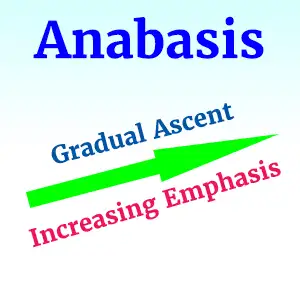
    Gradual Ascent

    Book cover for E.W. Bullinger's Figures of Speech Used in the Bible

    The figure of speech, anabasis, is so called when a writing ascends up step by step, with an increase of emphasis. Psalm 1 is a vivid example of this figure. “Blessed is the man –1) who walks not in the counsel of the ungodly, 2) nor stands in the way of sinners, 3) nor sits in the seat of the scornful.” Each phrase is successive in emphasis. Bullinger describes this verse in his Figures of Speech in the Bible as “the first continue in that mind, taking evil counsel. The second carry it out, as the principle of their walk. The third settle down in their evil, as on a seat” (p. 429). Another example is Zechariah 7:11: “But they refused to hearken, and pulled away the shoulder, and stopped their ears that they should not hear. Yea, they made their hearts as an adamant stone, lest they should hear the law, and the words which the Lord of hosts hath sent in his spirit by the former prophets…” This succession is a good description of the process that Israel went through to reject Jehovah and the law and the reason they ended up in captivity. The figure is not only used to describe a negative downfall. It can be positive as well. Ephesians 2:5–6 says, “Even when we were dead in sins, 1) he hath quickened us together with Christ, (by grace ye are saved) 2) and hath raised us up together, and 3) made us sit together in heavenly places in Christ Jesus.”

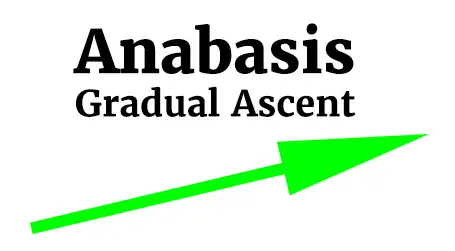
    Image for Figure of Speech Anabasis: Gradual Ascent

    What is then the emphasis of this figure? I believe that the phrases in succession point to the very next sentence or phrase following the ascent like an arrow that points upward. What is important is not the arrow, but what it is pointing toward. In Psalm 1 the next sentence is, “his delight is in the law of the Lord…and whatsoever he does shall prosper.” In Zechariah 7, the next sentence is: “therefore came a great wrath from the Lord of hosts.” Ephesians 2:7 is “that in the ages to come he might show the exceeding riches of his grace in his kindness toward us through Christ Jesus.” What a joy to see the emphasis of these verses and why they have so much impact!

  • Allegory

    Allegory

    Figure of Speech Allegory

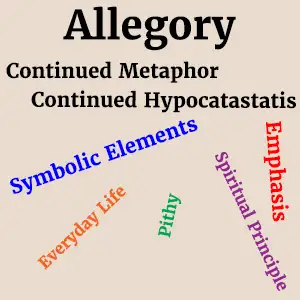
    Normally, the definition of allegory is similar to the following from “Silva Rhetoricae” (rhetoric.byu.edu): “A sustained metaphor continued through whole sentences or even through a whole discourse.” I believe that in terms of study of the Aramaic New Testament, this definition is too narrow. Especially in the Gospels, Jesus used examples which were not a whole story where every element was compared to something else. They were pithy short illustrations, usually from everyday life, that communicated a spiritual principle. Allegory involves the use of symbolic characters, events, or settings to convey deeper meanings or abstract concepts. Instead of presenting ideas directly, an allegory uses a narrative or story to represent and communicate underlying truths or moral lessons.

    Book cover for E.W. Bullinger's Figures of Speech Used in the Bible

    There are several examples in the Sermon on the Mount:

    Matthew 6:19–20 APNT:
    You should not place for yourself treasures on earth, where moth and rust corrupt and where thieves break in and steal.
    But place for yourself treasures in heaven, where neither moth nor rust corrupt and where thieves do not break in and do not steal.
    For where your treasure is, there is also your heart.

    This is a comparison of having a “treasure room” in a house, which was a glorified closet and would be subject to be corrupted by insects, weather, such as rain leaking through the roof, or thieves breaking a hole in the mud walls. It was a common picture of a storage room in a home. The entire passage teaches the lesson that spiritual treasures are much more important than earthly wealth.

    The emphasis in an allegory is on the comparative elements, but also on the moral of the illustration. Normally, the concluding sentence has the emphasis: “for where your treasure is, there is also your heart.” In every allegory, the student should seek for this concluding remark or the lesson behind the illustration.

    One well-known example of allegory in the Bible is the Parable of the Good Samaritan (Luke 10:25–37). In this story, Jesus uses the characters of a man who was robbed and beaten, a priest, a Levite, and a Samaritan to convey the broader message of showing mercy and compassion to others, regardless of their social or ethnic backgrounds. The characters and their actions symbolize different attitudes and behaviors, allowing the listeners to grasp the deeper moral lessons behind the story.

    Another example is the allegorical representation of the vine and the branches found in John 15:1–8. In this passage, Jesus compares himself to a vine and his followers to branches. The imagery of the vine and branches symbolizes the intimate connection between Jesus and his disciples, emphasizing the importance of remaining connected to him to bear spiritual fruit.

    There are two types of allegories: a continued metaphor and a continued hypocatastasis. Bullinger does a great job in explaining the difference and the Master Spreadsheet distinguishes these two types. Here is the quotation from Figures of Speech in the Bible:

    Few figures have been the subject of greater controversy than Allegory; or, have been more variously defined. One class of Rhetoricians declare that it is a continued metaphor: and another class declare that it is not. But, as is often the case under such circumstances, neither is quite correct, because both have a part of the truth and put it for the whole. Neither of the contending parties takes into consideration the existence of Hypocatastasis. And this fact accounts for the confusion, not only with regard to Allegory, but also with regard to Metaphor.

    All three figures are based on comparison.

    • Simile is comparison by resemblance;
    • Metaphor is comparison by representation;
    • Hypocatastasis is comparison by implication.

    In the first the comparison is stated; in the second it is substituted; in the third it is implied.

    Thus Allegory is a continuation of the latter two, Metaphor or Hypocatastasis; while the Parable[1] is a continuation of the Simile.

    This definition clears the whole ground, and explains the whole of the difficulties, and reconciles the different schools.

    The Allegory, therefore, is of two kinds; one in which it is continued Metaphor (as in Psalm 23), where the two things are both mentioned (Jehovah, and the Shepherd’s care), and what is asserted belongs to the principal object; the other, in which it is continued Hypocatastasis (Psalm 80:8–15), where only one thing is mentioned (the vine), and what is asserted belongs properly to the Secondary object; viz., to Israel. Israel whom it really refers, is not mentioned, but only implied.


    [1] Which see.

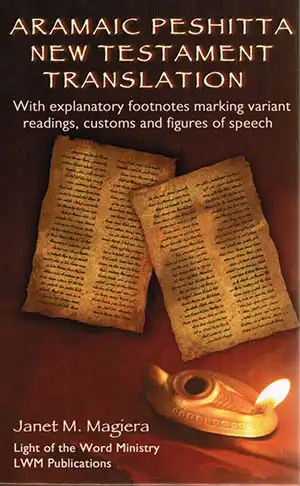
    Book cover for the Aramaic Peshitta New Testament Translation hardback
  • Metonymy

    Metonymy

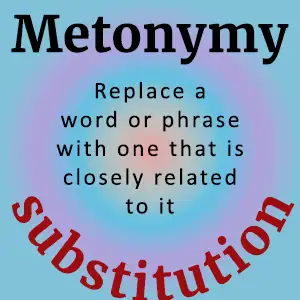
    Metonymy is a figure of speech commonly used in the Bible, as well as in literature in general. It involves the substitution of a word or phrase with another word or phrase that is closely associated with it, but not directly part of its literal meaning. This rhetorical device allows for a more vivid or expressive way of communicating ideas and concepts.

    In the Bible, metonymy is frequently employed to convey spiritual or symbolic meanings. Here are a few examples:

    “Bread” is used as a metonymy for food or sustenance. It represents the provision and nourishment necessary for survival. In Matthew 6:11, as part of the Lord’s Prayer, Jesus says, “Give us today our daily bread.” Here, “daily bread” symbolizes not only physical sustenance but also the trust in God’s provision for all our needs.

    “The crown” is used as a metonymy for a king or ruler. It represents the authority and power associated with the position. For instance, in Psalm 89:39, it is written, “You have renounced the covenant with your servant; you have defiled his crown in the dust.” Here, the crown symbolizes the king’s position and authority, and its defilement represents the humiliation or downfall of the king.

    “The sword” is used as a metonymy for warfare or conflict. It represents the power and violence associated with battles. In Matthew 26:52, Jesus says, “Put your sword back in its place. For all who draw the sword will die by the sword.” Here, the phrase “draw the sword” refers to engaging in violent conflict, while “die by the sword” symbolizes the consequence or retribution resulting from such actions.

    “The lamb” is used as a metonymy for Jesus Christ in the New Testament. It represents His sacrificial role and innocence. In John 1:29, John the Baptist refers to Jesus, saying, “Behold, the Lamb of God who takes away the sin of the world!” Here, the lamb symbolizes Jesus’ role as the ultimate sacrificial offering for the forgiveness of sins.

    In Bullinger’s Figures of Speech in the Bible there are 15 types of metonymy.  The distinctions are very difficult to assess.  In the Semitic languages, there are common metonymies which are often used and completely understood by an Eastern person.  However, because most of the Western Bible students do not have this same understanding from the culture, we have prepared a list of categories and the normal meaning associated with each word.

    Sample Verses
    IDFigureEnglish NameCategorySubcategoryKey WordMeaningSample VerseNotes
    43MetonymyChange of NounMeaningObjectsbreadprovisionJohn 6:32not all uses are marked
    44MetonymyChange of NounMeaningObjectsdooropening, entranceActs 14:27 
    45MetonymyChange of NounMeaningObjectsyokebondageActs 15:10 
    41MetonymyChange of NounMeaningObjectscupwhat is in it, portion in lifeMatthew 20:22often used of “wrath”
    42MetonymyChange of NounMeaningObjectstablewhat is on it, provisionRomans 11:9 
    26MetonymyChange of NounMeaningParts of BodyarmpowerLuke 1:51 
    32MetonymyChange of NounMeaningParts of BodybosomcareJohn 1:18 
    27MetonymyChange of NounMeaningParts of BodybowelscompassionPhilippians1:8 
    31MetonymyChange of NounMeaningParts of Bodyearhearing, obedienceLuke 12:3 
    30MetonymyChange of NounMeaningParts of Bodyeyeunderstanding, whole personMatthew 6:22uses not all marked in translation
    33MetonymyChange of NounMeaningParts of Bodyfaceperson, front of, presenceMatthew 11:10uses not all marked, many included in Idiom chart
    35MetonymyChange of NounMeaningParts of Bodyfeetperson’s actionsLuke 1:79uses not all marked in translation
    34MetonymyChange of NounMeaningParts of Bodyfingercontrol, authorityLuke 11:20 
    24MetonymyChange of NounMeaningParts of Bodyfleshperson, physical body, physical lifeMatthew 19:5 
    25MetonymyChange of NounMeaningParts of Bodyhandblessing, power, authority, instrument of somethingMatthew 26:64uses not all marked in translation
    29MetonymyChange of NounMeaningParts of Bodyheartwill, thoughtsMatthew 5:8uses not marked in translation
    28MetonymyChange of NounMeaningParts of Bodykidneys (reins)emotionsRevelation 2:23 
    36MetonymyChange of NounMeaningParts of Bodyloinsstrength, center of personActs 2:30used in phrase “gird up your loins”, meaning “get ready for action,” “base your strength on”
    37MetonymyChange of NounMeaningParts of Bodymouthspeaking, person speakingMatthew 12:34uses not all marked in translation
    38MetonymyChange of NounMeaningParts of Bodyneckperson’s lifeRomans 16:4 
    39MetonymyChange of NounMeaningParts of Bodytonguelanguage, person’s speechLuke 1:64 
  • Sermon on the Mount

    Sermon on the Mount

    Samples of Figures of Speech
    from the Sermon on the Mount

    Estimated reading time: 3 minutes

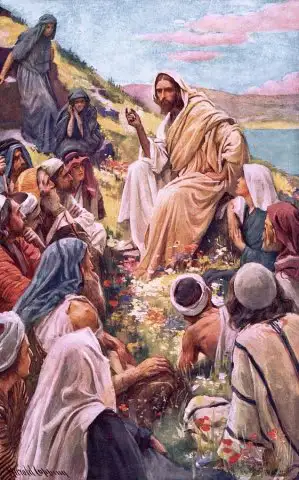
    Painting of the Sermon on the Mount

    REPETITION

    Blessed [are] they, 5:3-10

    “Truly I say to you” or “I say to you” 5:18, 20, 26, 28, 32, 34; 6:2, 5, 16, (these three are as a refrain) 25, 29. Truly I say to you: a very solemn phrase used by Jesus in the Gospels to take special note of what follows. It is the figure of speech, asterism, and is marked with an * preceding the phrase. This phrase is also set off by a comma to indicate that the following phrase is like direct speech. There are many types of Repetition, the closer the word is, the more it is emphasized:

    5:37 – “yes, yes, and no, no” called epizeuxis, means to consider your words carefully, this is a very solemn repetition.

    When a whole sentence or phrase is repeated exactly, it is like saying “Pay attention to what I said”

    5:29, 30: it is better for you that one of your members should be lost and not [that] your whole body should fall into Gehenna.

    Repeats 6 x – shows the structure of the passage

    5:21 you have heard that it was said….22 But I say to you…

    5:27, 28

    5:31, 32

    5:33, 34

    5:38, 39

    5:43, 44

    Another example is about wise man and foolish man 7:24-27

    “And the rain fell and the floods came and the winds blew and they beat against the house” shows how the exact same situation happened to both houses, but two different outcomes.

    Another kind of repetition is called “derivation” – where words from the same root are used in a passage – it defines the main topic of the section

    5:23, 24 offer, offering

    7:1, 2 Judge and measure

    7:7-10 ask, seek knock

    7:17-20 healthy and diseased

    Repetitions can encircle a passage:

    7:16, 20 “by their fruit you will know them”

    Repeat “and” called “polysyndeton”– consider each phrase separately until the end of the “ands”

    5:44

    ILLUSTRATION

    Simile, uses like or as

    Metaphor 5:13 “you are the salt of the earth” – explains what the comparison is

    5:14 “you are the light of the world”

    6:22 “the lamp of the body is the eye”

    Hypocatastasis — the comparison is implied

    7:15 wolves stand for wicked men

    Allegory

    See section above on allegory, has example from Sermon –Other examples:

    5:15-16

    6:22-24

    7:3-5

    7:13-14

    7:16-20

    7:24-27

    GRAMMAR:

    Idioms

    These are particular phrases that mean something more than the literal interpretation of the words

    Men: lit sons of men 5:16, 19

    Hypocrites: lit. receiver of faces 6:2, 5, 16, 7:5

    Word play (paronomasia)

    7:13-14

    Awraykha, broad

    Awurkha, road

    Ellipsis (see above)

    Examples: 5:19

    5:22 RACA

    6:18

    6:30

    Erotesis

    Types of questions – designed to cause us to ponder the truth of the teaching

    6:25, 26, 27, 28, 30

    7:4, 9, 10, 11

    Obvious answer “no” or “yes”

    5:26, 27

    7:10, 16

    Other grammatical figures:

    Parenthesis 5:19

    Antimeria 5:22, Gehenna of fire

    Interjections 7:5

    Hendiatris 6:13

    Climax 7:7

    Rhetoric (or could call it “Semitisms”) – have to understand the culture in order to know what it means – example in English is “hot dog”

    5:29 see explanation in footnotes

    5:31, 32

    5:39, turn the other cheek

    6:23, “evil eye”

    7:15 “clothing of lambs”

    5:22 Gehenna

    Meaning

    Metonymy – check out list above

    Heaven – stands for God 5:3

    Bread – stands for provision 6:11

    Fruit – stands for results 7:16, 20

    Synecdoche – part for whole

    “Sound a trumpet” 6:2

    Personification – giving human characteristics to inanimate object or thing

    Left hand 6:3

  • Paranomasia

    Paranomasia

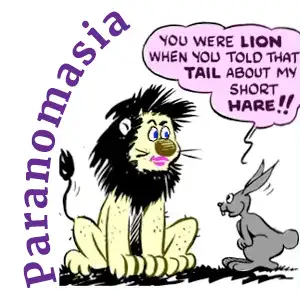
    Paranomasia means simply, rhyming words. We would call it word-play. Many of the sayings of Jesus and the parables have this figure of speech. When you know what the rhyming words are in Aramaic, then you can see what is emphasized in the passage. The example used in this article in the parable of the Lost Sheep. The key words are “one” khad and “joy” khedwa. There is joy over the one sinner that repents.

    Matthew 18:12–13:
    If a man have an hundred sheep, and one of them be gone astray (wekhad minnehon taey)
    And if so be that he find it … he rejoices (khadey) more over that sheep than of the ninety-nine that went not astray (dela taain)

    Luke 15:7:
    Likewise joy (khedwa) shall be in heaven over one sinner (kheda khatya) that repents.

    Khatya and tae also rhyme — gone astray and sinner.

    The emphasis is that finding ONE sinner that repents causes great JOY!! Truly the Lord is a good shepherd and continues to search out the lost. There is great rejoicing in heaven when one comes back to the fold.

    Another paranomasia is in:

    Matthew 6:28–29:
    Consider the lilies of the field, how they grow (shabhekhin)… even Solomon in all his glory (teshbokhteh) was not arrayed like one of these… Consider the ravens (orebhin)… and God feeds (merabbe) them. And which of you with taking thought (yaseph) can add to (oseph) his stature one cubit.

    Mark 11:17:
    My house shall be called of all nations the house of prayer (beth tzelutha yithqere) But ye have made it a den of thieve (mearta delestin).

    Prayer is contrasted with thieves.

    Luke 12:33:
    But lay up for yourselves treasures in heaven…where no thief approacheth (qarebh), neither moth (ruqba) corrupeth (marqebh).

    Luke 22:36:
    For I say unto you, that his that is written accomplished in me (limesaph bi) …For the things concerning me have an end (diledili supha)…It is enough (sepheq).

    Luke 12:32:
    Fear not, little flock (maritha) for it is your Father’s good pleasure (derae abukhon) to give you the kingdom.

  • Chiasmus

    Chiasmus

    Book cover for Chaismus in the New Testament

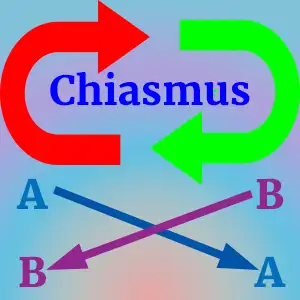
    Chiasmus or introversion is a figure of speech that has a very special emphasis and also pertains to the structure of a passage.  There is a wonderful book that you can order from CBD or any bookstore that is called Chiasmus in the New Testament by Nils W. Lund.  The entire book is full of examples of this figure of speech.  When we see this figure, the point that is emphasized is in the middle phrase or phrases of the introversion, or as Lund puts it: “The centre is always the turning point.”  If we used capital letters to describe a passage, the introversion would be ABCDDCBA.  The phrases in “D” would be the ones that are emphasized.

    The Sermon on the Mount in Matthew 5-8 is full of this figure.  Here are a few examples. The first one is from Matthew 5:3-10:

    A  Blessed are the poor in spirit: for theirs is the kingdom of heaven.

    B  Blessed are they that mourn: for they shall be comforted.

    C  Blessed are the meek: for they shall inherit the earth.

    D  Blessed are they which do hunger and thirst after righteousness: for they shall be filled.

    D  Blessed are the merciful: for they shall obtain mercy.

    C  Blessed are the pure in heart: for they shall see God.

    B  Blessed are the peacemakers: for they shall be called the children of God.

    A  Blessed are they which are persecuted for righteousness’ sake: for theirs is the kingdom of heaven.

    The middle phrases of D are emphasized and we see this is true because they are the main themes of the entire sermon, what is true righteousness and how to live it.

    Here is a chiasmus in Matthew 6:7-9 that emphasizes not to be like the hypocrites.  Notice also how the center phrase is the turning point.

    A  But when ye pray, use not vain repetitions, as the heathen do:

    B  for they think that they shall be heard

    C  for their much speaking.

    D  Be not ye therefore like unto them:

    C  for your Father knoweth what things ye have need of,

    B  before ye ask him.

    A  After this manner therefore pray ye:

    Matthew 6:24 is a chiasmus in one verse:

    A  No man can serve two masters,

    B  For either he will hate the one,

    C  And love the other;

    C  Or else he will hold to the one,

    B  And despise the other.

    A  Ye cannot serve God and mammon.

    The conclusion of Matthew 6 is a summary of the first part of the sermon.

    A  Therefore take no thought, saying, What shall we eat? or, What shall we drink? or, Wherewithal shall we be clothed? (For after all these things do the Gentiles seek:)

    B  for your heavenly Father knoweth that ye have need of all these things.

    C  But seek ye first the kingdom of God, and his righteousness;

    B  and all these things shall be added unto you.

    A  Take therefore no thought for the morrow: for the morrow shall take thought for the things of itself.  (Sufficient unto the day is the evil thereof.)

  • Figures of Speech Chart

    Figures of Speech Chart

    FigureEnglish NameCategoryDefinitionEmphasisNotesDB Code
    AetiologiaCause ShownRhetoricWhen speaker renders a reason for what he thinks, says or does.CauseIntroduced by therefore or becauseAETI
    AllegoryAllegoryIllustrationContinued comparison by representation or implication.Points of comparison — ending or beginning sentence is the conclusionAllegory is a broader term in Semitic languages, rather what we would call an “illustration” or “incident.”ALEG
    AmoebaeonRefrainRepetitionRepetition of the same phrase at the end of successive paragraphs.Repeated wordsAlso under Repetition in DBAMOE
    AnabasisGradual AscentRhetoricAn increase of sense in successive sentences.The logic of the sentencesThe concluding sentence is importantANBS
    AnacoluthonNon-SequenceRhetoricA breaking off the sequence of thought.The new pronounBeginning of the change of pronoun is important to noteANCL
    AnadiplosisLike Endings & BeginningsRepetitionRepetition of the same word or words at the end of one sentence or clause and at the beginning of another.The repeated wordsAlso under Repetition in DBANDP
    AnaphoraLike-BeginningsRepetitionThe repetition of the same word at the beginning of successive clauses or sentencesThe repeated wordAlso under Repetition in DBANAP
    AntanaclasisWord-ClashingRepetitionRepetition of the same word in the same sentence, with different meanings.1st meaning used is more importantHomonym – same word has more than one usageANTC
    AnthropopatheiaCondescensionMeaningThe ascribing of human attributes to God.The action or picture describedHebrew name is Derech Benai Adam, “the way of the sons of man.” This figure shows God’s diversityANTH
    AntimeriaExchange of Parts of SpeechMeaningThe exchange of a noun for an adjective or adverb.The changed wordThe second noun is the adjectiveANTM
    AntiptosisExchange of CasesMeaningOne case is put for another case, the governing noun being used as the adjective instead of the noun in regimen.The changed wordThe first noun is the adjectiveANTP
    AntithesisContrastRhetoricA setting of one phrase in contrast with another.The contrasting phraseParallel structureANTI
    AntonomasiaName ChangeMeaningChange of proper name for appellative or vice versaWhat description meansDescription takes place of the literal name, used often of names for Jesus ChristANTN
    ApostropheAsideRhetoricA turning aside from the direct subject matter to address othersPoints to specific groupThe group addressed needs to take special noteAPOS
    AsterismosIndicatingGrammarEmploying some word which directs special attention to some particular point of subject.Calls attention to what followsExamples include the phrase, “truly I say to you.”ASTR
    AsyndetonNo-AndsGrammarAn enumeration of things without conjunctions.The whole unitIt is important to view the group as a whole unit and there may be climactic emphasis on last item in listASYN
    BenedictioBlessingRhetoricAn expression of feeling by way of Benediction or blessing.The act of blessing and the blessing itselfThe phrase may end with “Amen.”BEND
    CatabasisGradual DescentRhetoricA decrease of sense in successive sentences.The logic of the sentencesOpposite of anabasisCATB
    CatachresisIncongruityMeaningOne word changed for another only remotely connected with it.Correct meaning.Look for the connectionCATC
    ChiasmosIntroverted CorrespondenceRhetoricAn inverted relationship between the syntactic elements of parallel phrasesThe central phraseThe middle phrase turns the point and is emphaticCHIA
    ClimaxGradationRepetitionContinuous anadiplosis – repetition of endings and beginnings of one sentence or clause.The build up of logicEach concept repeated is important to note and considerCLIX
    EironeiaIronyMeaningThe expression of thought in a form that naturally conveys the oppositeThe opposite meaningCan be sarcastic, but more often is only obviously the opposite. See also antiphrasisEIRO
    EllipsisOmissionRhetoricWords omitted from a sentence or phrase that are necessary to complete the grammar, but not the senseThe omitted word or conceptThere are many kinds of ellipsisELPS
    EpanadiplosisEncirclingRepetitionRepetition of the same word or words at the beginning and end of a sentence.Repeated word(s)Consider the sentences in between as a unit of thoughtEPAD
    EpanadosInversionRepetitionRepetition of different words in a sentence, in an inverse order (but same sense)Repeated wordsContributes to understanding of the structure of a passageEPND
    EpanorthosisCorrectionRepetitionRecalling of ivhat has been said, in order to correct it as by an afterthoughtThe correctionLook for the stronger statementEPOR
    EpizeuxisDuplicationRepetitionRepetition of the same word in immediate sucession.Repeated wordEffect is to establish the word duplicated, very solemn meaning, often used in addressing peopleEPZX
    ErotesisInterrogativeRhetoricThe asking of questions without waiting for the answer.AnswerThe meaning must be gleaned by putting the question into a statement; there are various kindsEROT
    EuphemismosEphemismMeaningChange of what is unpleasant for pleasantThe reality of what is meantEmphasis is on the unpleasant conceptEUPH
    HendiadysTwo for OneMeaningTwo words used, but one thing meant.The combination of conceptsThe one thing meant is greater than the individual meanings of the two wordsHDYS
    HendiatrisThree for OneMeaningThree words used, one thing meantThe combination of conceptsThe one thing meant is greater than the individual meanings of the three wordsHDTR
    HypallageInterchangeMeaningAn interchange of construction whereby a word is grammatically united with anotherThe noun in regimenIn a genitive phrase the first noun is interchanged as an adjectiveHYPA
    HyperboleExaggerationMeaningWhen more is said than is literally meant.The literal meaningMore is said in order to heighten the senseHYPB
    HypocatastasisImplicationIllustrationA declaration that implies the resemblance or representation, comparison by implicationWhat is comparedThere is an implication of similar qualities. Can be a verb or noun. In modern grammar it is called a metaphorHYPO
    InterjectioInterjectionInterjectionA parenthetic addition complete in itself, thrown in between, an exclamationWhat follows the exclamationThis is a broad figure, covering many kinds of interjections and exclamationsINTJ
    MeiosisBelittlingRhetoricA belittling of something in order to magnify something else.The true meaningCompare to tapeinosisMEIO
    MerismosDistributionMeaningAn enumeration of the parts of a whole that has been mentioned.The wholeExample: “morning and evening” means the whole day.MERI
    MetalepsisDouble MetonymyMeaningTwo metonymies, one contained in the other, but only one expressedThe meaning underneathThere are at least two steps to discover the meaningMTLP
    MetaphorRepresentationIllustrationA declaration that one thing is (or represents) another, or comparison by representationQuality that is comparedUsually has form of the verb “to be”MEPH
    MetonymyChange of NounMeaningThe change of one noun for another related nounThe related nounThere are several categories.MTNY
    OxymoronWise-FollyRhetoricA wise saying that seems foolishThe wisdom or lesson impliedSome proverbs utilize this figureOXYM
    ParabolaParableIllustrationComparison by continued resemblance.Points of comparisonCan be an extended simile with more than one point of comparison. Parable is a broader term in Semitic languagesPARB
    ParadiastoleNeither-NorGrammarRepetition of the disjunctives:  neither, nor, either, orWords in betweenConsider each noun or phrase carefullyPARD
    ParamegnonDerivationRepetitionRepetition of words derived from same root: similar in sound but different in meaningThe build up of conceptUsually different nouns or verbs formed from same root but which have distinct meanings of their ownPARM
    ParanomasiaRhyming WordsRepetitionRepetition of words similar in sound, but not in sense or origin.The concepts that rhymeEach concept is importantPARN
    ParemboleInsertionRhetoricA parenthetic addition complete in itself – a digression.The parenthesis as a unitTrue parentheses where the context is not needed or required to be understoodPARL
    ParenthesisParenthesisRhetoricA parenthetic addition complete in itself, but needs context to be understoodThe following sentenceThis is the true figure of parenthesis used as an explanation or description.PART
    ParoemiaProverbRhetoricA saying, a trite expression, common remark, maximThe moral lesson impliedThese are culturally related and it is important to understand the manners or customs behind the sayingPARE
    ParomoesisAssimilationRepetitionRepetition of inflections similar in soundWords with repeated inflectionsAlso under Repetition in DBPARO
    PeriphrasisCircumlocutionMeaningWhen a description is used instead of the name.The actionExample: “lifted up his voice.”PERH
    PleonasmRedundancyMeaningWhere what is said is immediately after put in another or opposite way to make it impossible for the sense to be missed.Repeated conceptSecond word or phrase is strongerPLEO
    PolyptotonMany InflectionsRepetitionRepetition of the same noun or verb in different conjugations or inflections.The root verbCan be verb with related noun/adjective. Common in Semitic languages.PLYP
    PolysyndetonMany-AndsGrammarThe repetition of the word “and” at the beginning of successive clauses or sentences.Each connected noun or phraseConsider each word connected with “and” carefullyPLYS
    ProsopopoeiaPersonificationIllustrationThings or ideas represented as persons.The actionHuman characteristics or actions are given to inanimate objects or abstract ideas.PRSP
    RepetitioRepetitionRepetitionRepetition of the same word or words irregularly in the same passage.Ties the passage togetherThe repeated word is emphasized but often to set the structural pattern. Many different kindsREPT
    SimileResemblanceIllustrationA declaration that one thing resembles another, comparison by resemblance.Quality that is comparedUses “like” or “as” in comparison.SIML
    SynathreosmosEnumerationRhetoricThe enumeration of the parts of a wiole which has not been mentionedEach concept or phraseA number of different words are united under a common themeSYNA
    SynecdocheTransfer (or Part for Whole)MeaningThe exchange of one idea for another associated idea.The implied ideaThis figure is often used of time.SYNC
    SynonymiaSynonymMeaningRepetition of words different in sound and origin, but similar in meaningThe repeated conceptCommon in English and Western languages.SYNO
    TapeinosisDemeaningRhetoricA lessening of a thing in order to increase it.The superlative meaningDiffers from meiosis – the word(s) emphasized are the sameTAPE
    ZeugmaUnequal YokeRhetoricWhen one verb is yoked to two subjects, while grammatically a second verb is required.First verbThere are four forms in GreekZEUG
  • Introduction to Figures of Speech

    Introduction to Figures of Speech

    Estimated reading time: 3 minutes

    An excerpt from:

    Book cover for the APNT Hardback edition

    All language is ruled by laws, but to convey special emphasis of a word or group of words, these general laws of language are purposefully departed from, and other laws of language are invoked, giving the single word or group of words a new form. The Greeks called these departures from normal language use, schemata, meaning “change of forms,” from which the term “figure of speech” originated. When a word or words fail to be true to fact, they are figures of speech and bring an added emphasis to the basic truth of a sentence.

    E. W. Bullinger stated in the beginning note of his book Figures of Speech Used in the Bible:

    “…whenever and wherever it is possible, the words of Scripture are to be understood literally, but when a statement appears to be contrary to our experience, or to known fact, or revealed truth; or seems to be a variance with the general teaching of the Scriptures, then we may reasonably expect that some figure is employed. And as it is employed only to call our attention to some specially designed emphasis, we are at once bound to diligently examine the figure for the purpose of discovering and learning the truth that is thus emphasized.”

    One phrase above that should be noted is specially designed emphasis. The study of figures of speech needs to be integrally linked with a search for this emphasis. In How to Enjoy the Bible, Bullinger clarified how important this emphasis was: “the Figures, when used in connection with the ‘words which the Holy Ghost teacheth,’ give us the Holy Spirit’s own marking, so to speak, of our Bible…calling our attention to what He desires us to notice for our learning, as being emphatic, and conveying His own special teaching.” Every author has used figures for emphasis on what is important, but it is crucial to our understanding of the Bible to know what God intended to be emphasized in any particular passage. Thus, the search in this field should be to find out what each type of figure emphasizes and how it is used in a verse or passage.

    Types of Figures

    The Aramaic Peshitta New Testament Translation is filled with footnotes and markings in the text itself of the common figures of speech. It is not marking every single figure of speech possible, but marks the ones which contribute to an added understanding of the text. Light of the Word Ministry is developing a simple classification system that will clear up many of the misunderstandings in this field and enable the Bible student to understand what the emphasis from the Holy Spirit is in a particular passage. A figure is always used to add force to the truth presented, emphasis to the word or words and depth of meaning to the entire context. The type of figure determines the emphasis in the following five general ways:

    1. Illustration: this category includes all types of comparisons. The emphasis is on the points of comparison.
    2. Repetition: The repeated word is what is emphasized. The closer the repetition, or the more frequently it is used, the greater is the degree of emphasis.
    3. Meaning: Although this category is broad, the underlying meaning is always emphasized.
    4. Grammar: This category covers all uses that have a grammatical basis. Each figure has an individual emphasis, but is always employed with consistency.
    5. Rhetoric: The general rule of this category is that the word or phrase used with the figure is what is emphasized. There are two subcategories, interjection and parenthesis.

    Now that we have looked at the general categories, please study the Table of Figures of Speech chart and pay particular attention to the column about emphasis. We have listed both the Greek/Latin name and also the English name in order to help with this study.